
Dhaka, 2 November 2026: Questions over the sources of political party funding and the gap between declared finances and actual operating costs have come into focus following a new study by Transparency International Bangladesh (TIB). The research has highlighted weaknesses in financial transparency, accountability and internal governance among political parties in Bangladesh.
According to the study, a political party with an organisational network covering all 64 districts and 4,553 unions could require between Tk 302 crore and Tk 393 crore annually to maintain its offices and carry out political activities. If the organisation extends to the ward level within unions, the estimated annual expenditure could rise to between Tk 1,532 crore and Tk 2,188 crore.
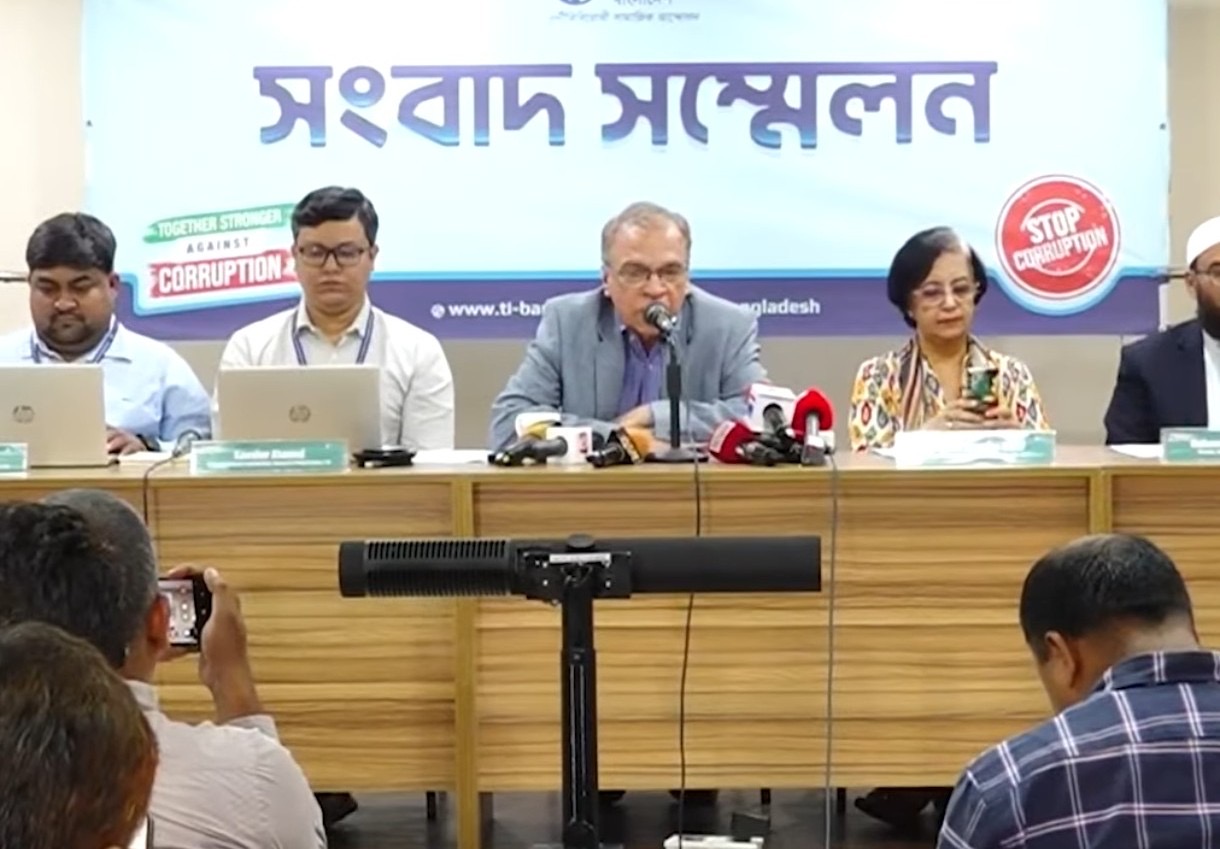
The findings were presented in a report titled Institutional Governance of Political Parties in Bangladesh at a press conference held at TIB’s office in Dhanmondi, Dhaka, on Sunday. TIB Executive Director Iftekharuzzaman attended the event, where the organisation outlined the financial challenges faced by political parties and raised concerns about the lack of effective oversight.
The study suggests that membership fees alone cannot cover the costs of running political organisations, particularly those with extensive networks across the country. As a result, parties depend on donations, contributions from influential individuals and other sources of funding to maintain their activities.
TIB estimated that a party meeting the minimum organisational requirements for registration could generate approximately Tk 26 lakh annually through membership fees. However, maintaining an organisation of that size could cost between Tk 14 crore and Tk 25 crore each year.
For a party with offices and organisational structures extending across the country to the union level, annual income from membership fees could reach around Tk 37.5 crore. Even so, the estimated cost of running such an organisation would be substantially higher.
The study also estimated that a party with a network extending to the ward level could collect approximately Tk 116 crore annually through membership fees. Despite the larger amount, the revenue would remain far below the estimated operational expenses.
TIB clarified that these figures represent estimated costs and potential income based on different organisational structures. They should not be treated as the actual financial accounts of any specific political party. The estimates of membership income also exclude donations, nomination fees, special fundraising campaigns and other sources of revenue.
Speaking at the press conference, Iftekharuzzaman said the existing political culture requires substantial financial resources to maintain party activities. However, the way funds are collected and managed often depends on individuals rather than transparent institutional procedures.
He pointed out that this dependence creates a considerable difference between the financial information officially reported by political parties and the money actually spent on their activities.
According to the research, local party offices, rallies, meetings, transportation for activists and other organisational programmes are frequently financed by local leaders and wealthy supporters. Such spending may not appear in the financial statements maintained by the parties’ central offices.
The study also identified businesspeople and wealthy individuals as important sources of funding for political parties that hold power or are considered likely to come to power. Some individuals reportedly provide financial support in the hope of receiving party positions, election nominations or other advantages in return. In certain cases, businesses may also face pressure to provide money.
TIB warned that this type of financial dependence can create relationships based on personal benefits and political influence. Individuals with substantial financial resources may gain greater opportunities to influence party decisions, candidate selection and organisational activities.
The report further noted that some political parties raise money through public contributions and crowdfunding. Other sources include the sale of nomination forms and publications, as well as revenue from party-owned properties.
However, the lack of clear procedures for collecting, managing and spending money increases the risk of corruption. TIB also cautioned that financial pressure within political organisations can contribute to the use of money and influence in ways that weaken democratic practices.
The research examined the financial statements for 2025 of four political parties that had been published in different media outlets. Their declared annual income ranged from Tk 1.82 crore to Tk 23.68 crore, while their reported expenditure ranged from approximately Tk 1.87 crore to Tk 23.91 crore.
TIB observed that these declared figures appeared significantly lower than the estimated costs of operating political organisations and conducting national-level programmes. Nevertheless, the organisation cautioned that the reported financial statements and its cost estimates could not be compared directly because they were calculated using different methods and organisational assumptions.
The study also found shortcomings in the financial management systems of political parties. According to TIB, none of the parties examined had a comprehensive and independent financial policy or a detailed set of procedures covering all aspects of financial management.
Although party constitutions generally mention sources of income and expenditure, the report found that they often lack clear rules on fundraising, approval of expenses, management of funds, internal financial controls and accountability. The absence of regular annual budgets was another concern identified by the researchers.
Under existing regulations, registered political parties must submit audited financial statements to the Election Commission every year. However, TIB said these audits often fail to provide a complete picture of actual financial transactions, income sources and expenditure.
The organisation also referred to instances in which newly established or smaller political parties allegedly submitted nominal or fabricated audit reports for fees ranging from Tk 20,000 to Tk 25,000.
Public access to political parties’ financial information was another major concern. The study reviewed the websites of 16 active political parties and found that none published annual financial statements or detailed information about election-related expenditure.
Furthermore, financial reports submitted to the Election Commission are not consistently made available to the public. This limits citizens’ ability to examine how political parties collect and spend their money.
To address these problems, TIB recommended making the publication of political parties’ financial statements compulsory. It also called for all income and expenditure at both central and local levels to be included in official accounts.
The organisation proposed that financial transactions exceeding a specified amount should be conducted through banks to improve transparency and traceability. It also recommended introducing standardised accounting systems and strengthening the Election Commission’s authority to examine the audited financial statements submitted by political parties.
TIB further suggested that audits should be conducted by chartered accountancy firms included on an approved list, helping to improve the reliability of financial reporting.
Iftekharuzzaman said expectations had grown after the July uprising that Bangladesh’s political culture would move away from power-centred practices. However, he expressed concern that the influence of money, the misuse of power and a lack of accountability continued to shape political activities.
He also linked financial irregularities and the abuse of influence to internal conflicts within major political parties. In his view, political participation has increasingly become associated with the pursuit of power and personal advantage rather than public service.
The TIB executive director stressed that political parties must take responsibility for improving their internal governance. He said meaningful institutional reforms were necessary to strengthen democracy and rebuild public confidence in political organisations.
The research report was presented by TIB Senior Research Fellow Md Julkarnayeen, along with research associates Kawsar Ahmed and Kazi Aminul Hasan. TIB Adviser-Executive Management Professor Sumaiya Khair, Director of the Research and Policy Division Muhammad Badiuzzaman and Director of Outreach and Communication Mohammad Touhidul Islam were also present at the press conference.
The findings highlight the need for stronger financial oversight and greater public access to information about political party funding. Ensuring that political organisations disclose their income and expenditure, follow clear financial procedures and remain accountable to citizens could become an important step towards improving democratic governance in Bangladesh
Comments
No comments yet. Be the first.
Related Stories
Related Stories
First published 2 November 2026. Spotted an error? Read our corrections policy.