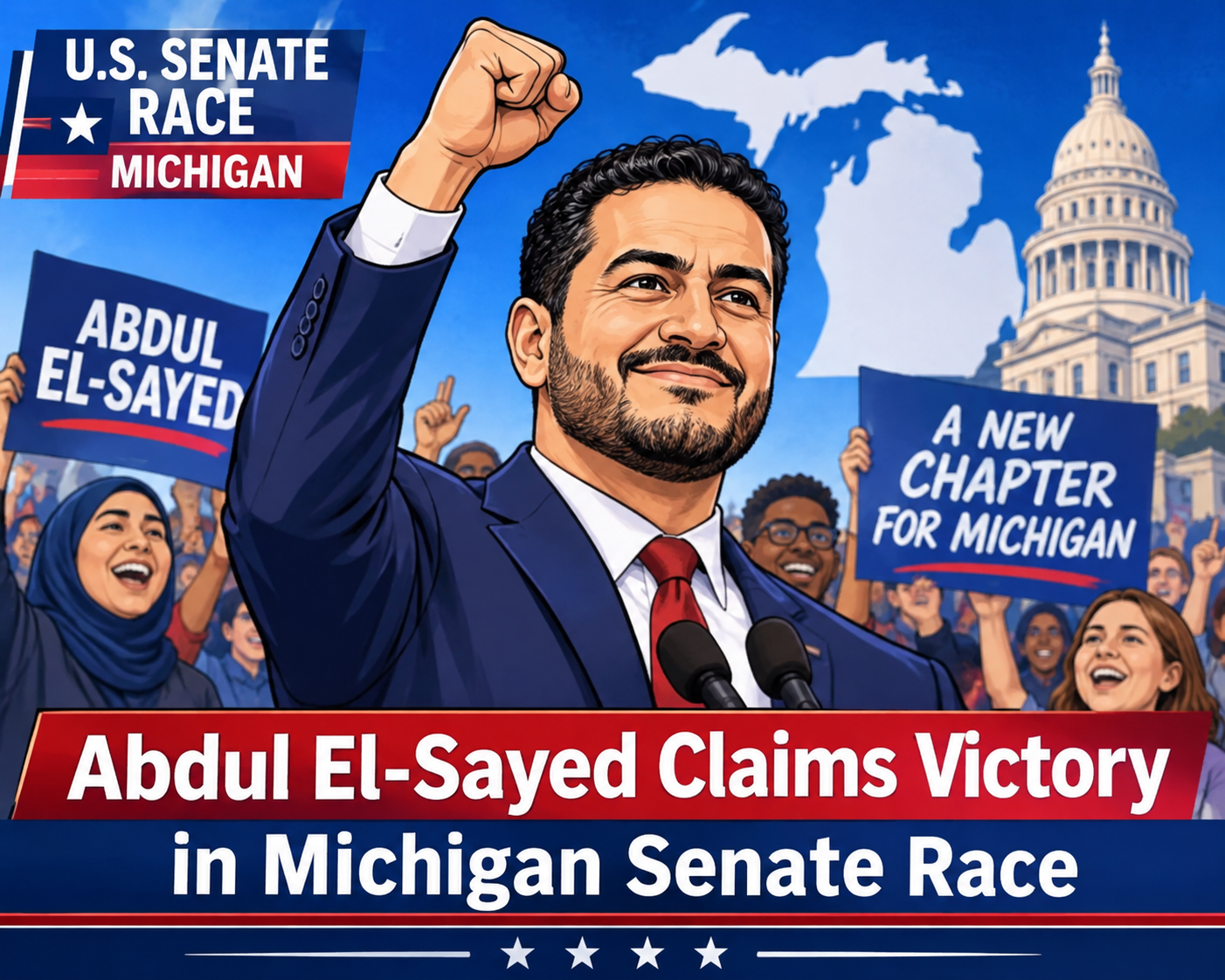
Democrat Abdul El-Sayed declared victory early Wednesday in Michigan's US Senate election, defeating former Republican lawmaker Mike Rogers. If confirmed, the victory would make El-Sayed the first Muslim elected to the US Senate.
“Michigan, we did it!” El-Sayed told supporters at his campaign headquarters in Detroit.
“I am so proud and honoured to stand here as your senator-elect from the great state of Michigan.”
El-Sayed's victory came despite a late setback in his campaign. Congresswoman Haley Stevens, who had lost the Democratic primary to El-Sayed, endorsed Rogers shortly before the election.
A physician by profession, El-Sayed campaigned on a progressive platform that included universal healthcare. His victory allows Democrats to retain a key Senate seat being vacated by retiring Senator Gary Peters.
Republicans mounted an aggressive campaign against El-Sayed, portraying Democrats as communists and accusing him of being a terrorist who would pose a threat to Americans.
El-Sayed, 42, responded with a campaign focused heavily on healthcare and the economic pressures facing ordinary Americans. He promised to help voters navigate the country's complicated healthcare system and argued that people should not face enormous medical bills simply for seeing a doctor.
During the campaign, El-Sayed also criticised America's multi-billion-dollar for-profit healthcare system and promised to push for major reforms.
His campaign attracted large crowds across Michigan, including in traditionally conservative areas where Republican support has historically been strong.
El-Sayed also pledged to reduce the influence of money in politics and address the economic difficulties affecting voters who are increasingly looking for new political leadership.
His election also makes him the first Democratic physician elected to the US Senate since 1969.
Comments
No comments yet. Be the first.
Related Stories
Related Stories

First published 5 November 2026. Spotted an error? Read our corrections policy.