
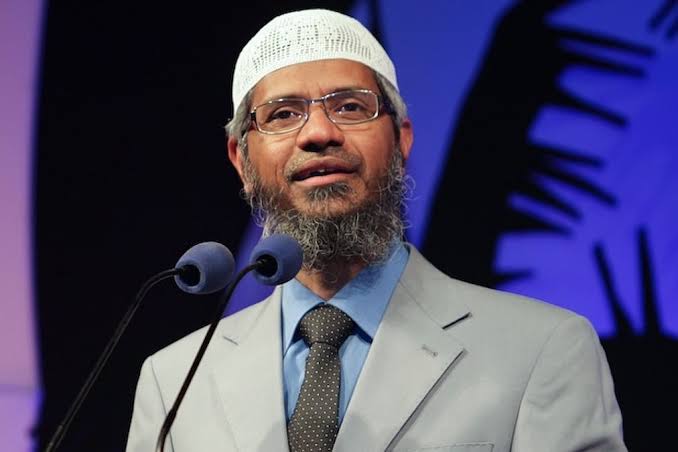
Kuala Lumpur: The complex intersection of geopolitics, religious discourse, and international law once again took center stage as the Malaysian government reiterated its steadfast stance regarding controversial Islamic televangelist Dr. Zakir Naik. With the Malaysian Home Ministry explicitly declaring that Dr. Naik will not be deported back to India, the protracted legal and diplomatic standoff continues to linger, reflecting the delicate balance nations must maintain between bilateral relations, sovereign immigration laws, and the rights of permanent residents. The Core of the Controversy: Background and Allegations The genesis of this international dispute dates back several years. Dr. Zakir Naik, a prominent Indian Islamic preacher and founder of the now-banned Peace TV, left India in 2016 as investigative agencies began scrutinizing his speeches, financial transactions, and organizational activities. Indian authorities subsequently charged him with money laundering, hate speech, and inciting communal disharmony through his televised lectures. For New Delhi, Dr. Naik's extradition has long been a matter of high priority. The Indian government formally requested his extradition under the bilateral extradition treaty between India and Malaysia, seeking to put him on trial in domestic courts. However, Dr. Naik has consistently maintained his innocence, claiming that the accusations against him are politically motivated, orchestrated by hostile political elements, and that he would not receive a fair trial if returned to India. Malaysia’s Stand: Sovereignty and Safety Concerns Amid mounting pressure from Indian authorities, successive Malaysian administrations have navigated a cautious path. Dr. Naik was granted permanent residency status in Malaysia, a legal status that affords him shelter within the Southeast Asian nation. The Malaysian Home Ministry's repeated refusal to deport him is anchored in several legal and humanitarian principles. Malaysian officials have frequently emphasized that under domestic immigration laws, a permanent resident who does not break local laws is entitled to residency. Furthermore, Kuala Lumpur has expressed explicit concerns regarding whether Dr. Naik would face a safe and impartial judicial process upon return. Malaysian leadership has maintained that as long as Dr. Naik does not pose a threat to public order and domestic security within Malaysia, his deportation remains off the table, effectively prioritizing national sovereign discretion over external extradition requests. Geopolitical Implications and Bilateral Ties The Zakir Naik issue has inevitably cast a shadow over diplomatic relations between India and Malaysia, two nations that historically share robust trade, cultural, and strategic ties. India remains a regional powerhouse and a crucial economic partner for Malaysia, making bilateral friction undesirable for both capitals. Diplomatic analysts note that Malaysia’s handling of the situation illustrates the intricate tightrope walk required in modern foreign policy. On one hand, Kuala Lumpur values its extensive economic and strategic partnership with New Delhi. On the other hand, expelling a high-profile religious figure with a substantial domestic and international Muslim following carries significant internal political and social sensitivities within Malaysia's pluralistic society. Consequently, the Malaysian government has opted for a policy of containment—permitting Dr. Naik to reside in the country while advising him to refrain from meddling in local politics or delivering speeches that could inflame religious tensions within Malaysia's diverse communities. The Global Reach and Impact of Peace TV To understand the gravity of the controversy, one must examine Dr. Naik's global footprint. Before his broadcasting network faced widespread bans in India, Bangladesh, the UK, and Canada, his lectures reached millions of viewers worldwide. Known for his encyclopedic knowledge of comparative religion and rapid-fire citations from various holy scriptures, he polarized public opinion globally. To his supporters, he is an articulate scholar of Islam who clarifies misconceptions and inspires religious devotion. To his critics, his polarizing rhetoric promotes religious intolerance, sectarian division, and radicalization. The bans imposed on his media outlets in multiple jurisdictions underscore the global anxiety surrounding hate speech and security in the digital age. Yet, his safe haven in Malaysia has allowed him to maintain a digital presence, continuing to engage with his global audience online. A Prolonged Impasse with No End in Sight As the situation stands, the standoff over Dr. Zakir Naik represents a classic deadlock in international jurisprudence where national sovereignty overrides international cooperation frameworks. Unless there is a dramatic shift in Malaysia's domestic political landscape or new legal parameters are introduced under bilateral treaties, Dr. Naik is expected to remain in Malaysia as a permanent resident. The ongoing saga serves as a compelling case study in international relations, highlighting how legal definitions of crime, political asylum, and state sovereignty frequently collide in an increasingly interconnected yet politically fractured world.
Comments
No comments yet. Be the first.
Related Stories
Related Stories

First published 3 November 2026. Spotted an error? Read our corrections policy.