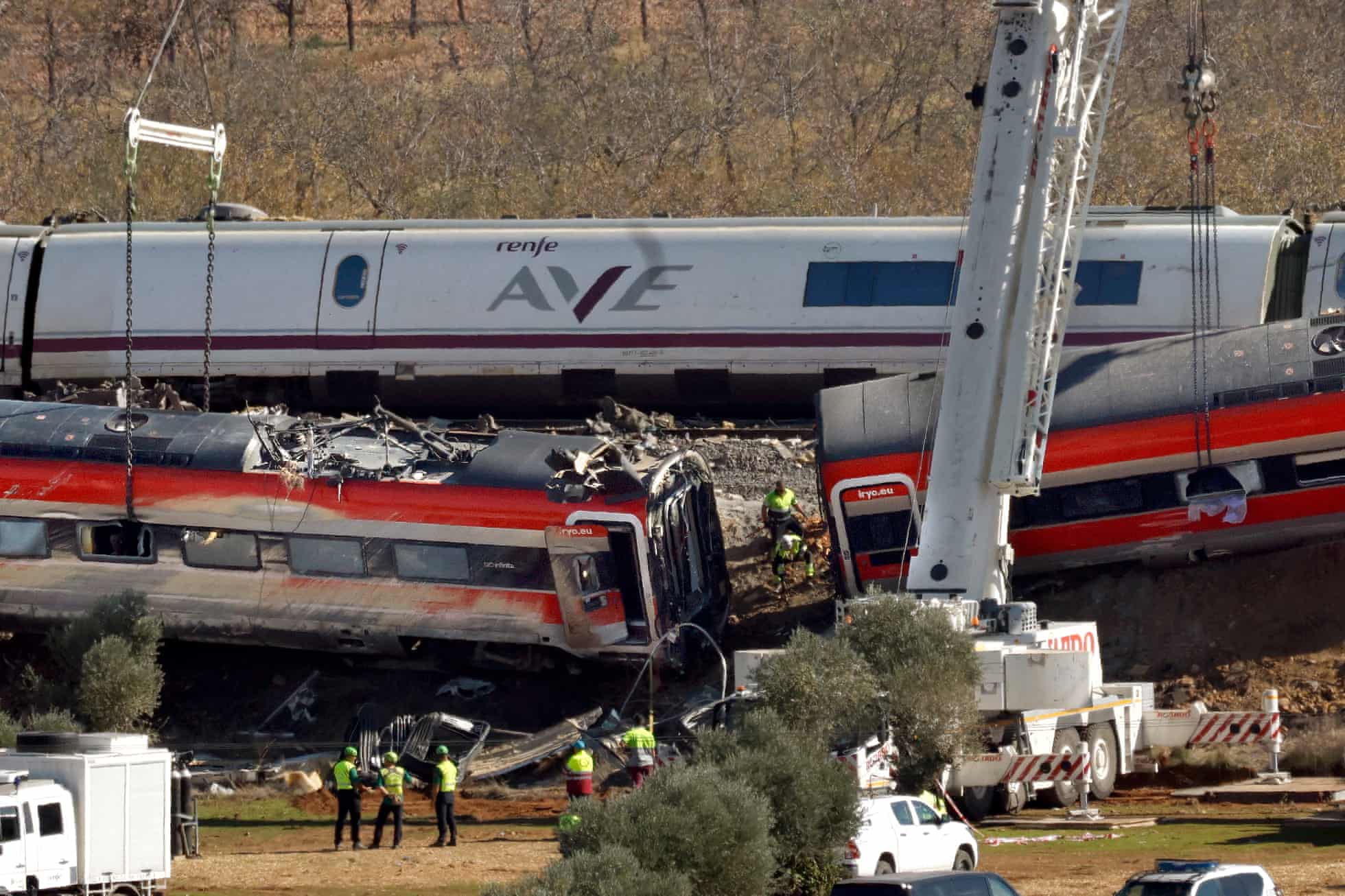
Two Australian citizens have been confirmed among the 69 people killed in a devastating high-speed train collision in Spain, bringing further grief to families waiting for news of their loved ones. Spanish authorities confirmed the identities of the two Australians as part of the final identification process following one of Europe’s deadliest railway disasters in recent years.
Australia’s Department of Foreign Affairs and Trade (DFAT) confirmed on Wednesday that two of its citizens had died in the accident. The department said it was providing consular assistance to their families and expressed condolences to those affected by the tragedy.
The identities of the two Australians have not been made public. Spanish officials confirmed that they were among three victims identified in the latest stage of the investigation, alongside a Japanese citizen. The confirmation brought the identification process for all 69 victims to completion.
The collision occurred on 28 October near the village of Urda in Spain’s central region of Castilla-La Mancha, approximately 130 kilometres south of Madrid. Two high-speed trains operated by different railway companies were involved in the disaster. A train operated by Spain’s state-owned railway company Renfe crashed into the rear of a stationary train belonging to private operator Iryo.
Around 500 passengers were travelling on the two trains when the accident happened. The collision caused extensive damage to the carriages, leaving rescue workers with a difficult and demanding operation. Emergency teams, police officers and forensic specialists worked at the scene to rescue survivors, recover victims and identify those who had lost their lives.
The identification process took several days because of the severe damage caused by the impact. Forensic specialists had to examine remains and use scientific procedures to establish the identities of victims. Families faced an extremely painful wait as authorities worked to provide accurate information about those who had been missing since the crash.
According to Spanish authorities, the 69 people who died included 54 Spanish citizens and 15 foreign nationals. The international victims came from several countries, including the United States, Australia, Japan, Argentina, Canada, France, Mexico, Portugal, Tunisia and the Czech Republic.
The Australian government had been in contact with Spanish authorities since the accident to establish the safety and whereabouts of its citizens. Foreign Affairs Minister Penny Wong also expressed sympathy for Spain and the families affected by the collision. She conveyed Australia’s condolences to Spanish Foreign Minister José Manuel Albares and said the country’s thoughts were with those who had lost relatives and friends.
The tragedy has also raised serious questions about the safety of Spain’s high-speed railway network. Investigators are examining a series of events involving railway communication and automatic safety systems that preceded the collision.
Initial information from Spanish authorities indicated that a failure in an automatic safety system caused trains to stop along a 63-kilometre section of railway track. The control centre in Madrid subsequently authorised the Renfe train to continue its journey while the Iryo train remained stationary on the same track. The Renfe service then struck the stationary train.
Investigators are examining why the train was allowed to move forward despite the safety problem and whether decisions made at the control centre contributed to the disaster. The findings could have significant consequences for railway operations and safety procedures across the country.
The accident has placed Spain’s railway authorities and government under considerable public pressure. The country’s high-speed rail system has long been considered one of the most developed in Europe. However, the latest collision has raised concerns about whether existing safety arrangements are sufficient to prevent similar disasters.
Spain’s Transport Minister Óscar Puente announced his resignation on Tuesday following the accident. Speaking before a parliamentary committee, he said he could not continue in his position after two serious railway disasters within less than a year. His decision came amid growing criticism and demands for accountability from the public and political groups.
The latest collision is particularly concerning because Spain experienced another deadly high-speed railway accident in January. That disaster occurred in the southern region of Andalusia and claimed 46 lives. The two incidents have intensified discussions about railway infrastructure, emergency procedures and the effectiveness of safety technology.
Prime Minister Pedro Sánchez has faced increasing pressure to restore public confidence in the country’s railway system. Following the latest accident, his government announced three days of national mourning to honour the victims. He also promised that authorities would investigate the circumstances surrounding the collision and take steps to improve railway safety.
The disaster has affected not only Spanish families but also people from several countries whose citizens were among the victims. For the families of the two Australians, the confirmation has brought an end to the uncertainty surrounding their loved ones, but it has also marked the beginning of a difficult period of grief.
Australian officials are continuing to provide support to the affected families, including assistance with arrangements following the deaths. Meanwhile, Spanish authorities are working to establish the full circumstances behind the collision and determine whether failures in communication, safety systems or operational decisions played a role.
As investigations continue, the tragedy has become a reminder of the importance of reliable safety systems and effective communication in modern railway transportation. The deaths of 69 people, including two Australians, have left families across several countries mourning and placed Spain’s railway safety standards under renewed scrutiny.
Comments
No comments yet. Be the first.
Related Stories
Related Stories
First published 4 November 2026. Spotted an error? Read our corrections policy.