
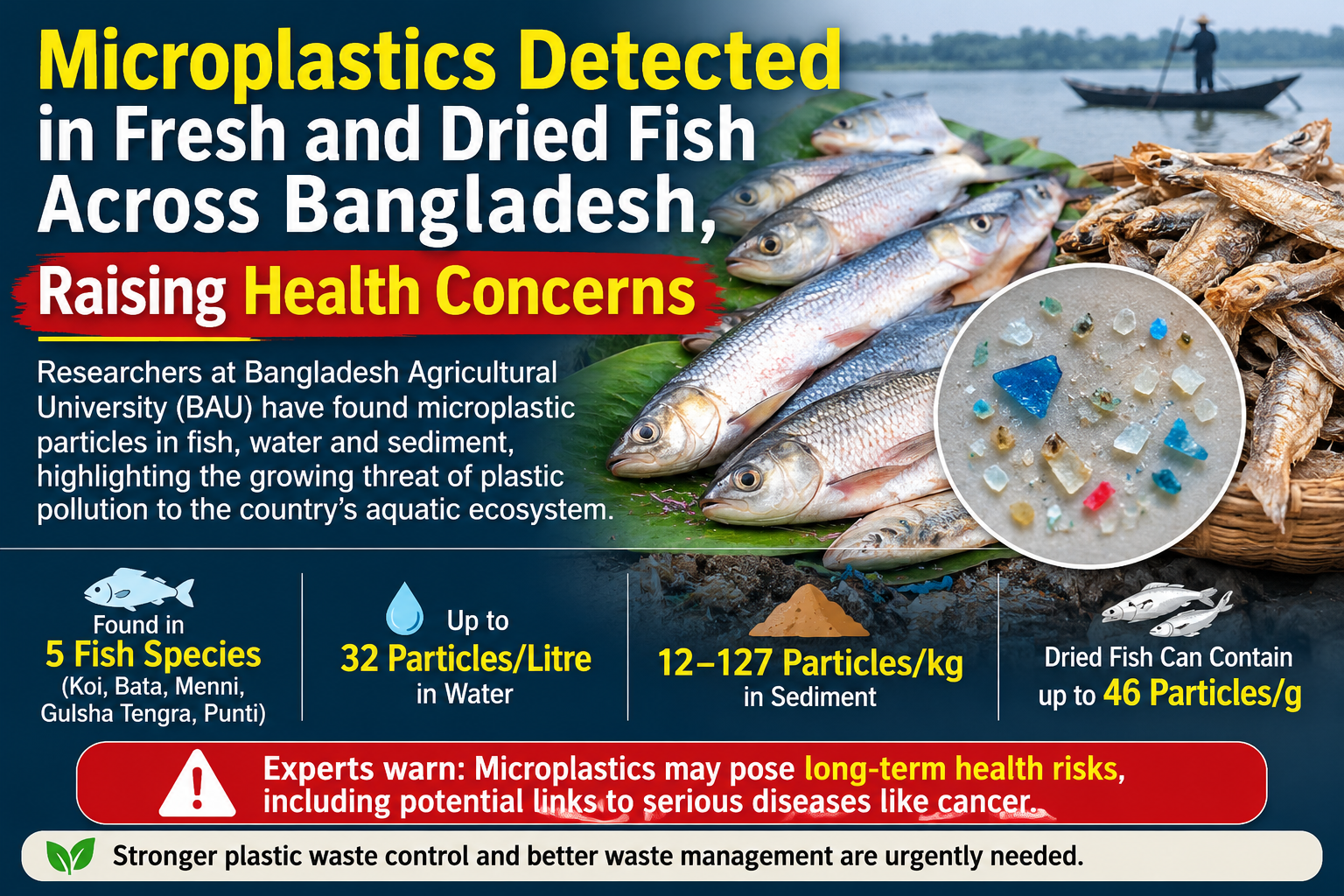
Microplastics have been detected in fish, water and sediment across different parts of Bangladesh, raising concerns about aquatic pollution and food safety. Researchers from Bangladesh Agricultural University (BAU) have found tiny plastic particles in both fresh and dried fish, highlighting the growing threat of plastic pollution to the country's aquatic ecosystem.
A study led by Professor Dr Md Shahjahan of BAU's Department of Fisheries Management examined 150 fish specimens collected from Arial Beel. Microplastics were detected in five species: climbing perch (koi), bata, menni, gulsha tengra and punti.
The study, published in the Journal of Hazardous Materials Advances, found microplastic particles in the intestines, gills and edible muscle tissues of the fish. Climbing perch recorded the highest concentration.
Researchers also found between 11 and nearly 32 microplastic particles per litre of water. Sediment samples contained between 12 and more than 127 particles per kilogram.
Microplastic contamination in commercial fish ponds
Another study, led by Professor Dr Md Badiuzzaman Khan of BAU's Institute of Environmental Science and Disaster Management, investigated fish and bottom sediments from 25 commercial ponds in Trishal upazila of Mymensingh.
The research examined 150 fish from six species: rui, katla, pangas, mrigal, common carp and sarpunti. Microplastics were detected in 90 of the 150 fish samples.
Rui and pangas showed comparatively higher contamination, while sarpunti had the highest average number of particles in its digestive tract. The pond-bottom sediment contained an average of 11 particles per kilogram.
Published in the journal Environmental Pollution, the research was titled "Microplastic in Freshwater Aquaculture: Evidence of Sediment-Fish Transfer and Associated Ecological Risks in Bangladesh".
According to Professor Khan, discarded plastic bags and packaging materials, nylon and polyester fishing nets, abandoned bottles and deteriorating plastic pipes are among the major sources of microplastic pollution. As these materials break down, tiny plastic particles enter water bodies and eventually accumulate in fish.
Dried fish contain significantly higher concentrations
A separate study conducted by Professor Dr Md Shahjahan of BAU's Faculty of Fisheries examined fresh and dried loittya, churi and faissya fish collected from Fishery Ghat in Chattogram and Mohipur Fish Landing Centre in Kuakata.
The findings revealed that microplastic concentrations were higher in the gills and digestive tracts than in muscle tissues.
The average concentrations recorded per gram were:
| Fish species | Fresh fish | Dried fish |
| ------------ | -------------- | ------------ |
| Loittya | 0.21 particles | 41 particles |
| Churi | 0.2 particles | 46 particles |
| Faissya | Not specified | 2 particles |
Researchers suggested that the higher concentration in dried fish could be attributed to plastic pollution in water and moisture loss during the drying process. As water content decreases, the concentration of particles relative to the fish's weight increases.
Long-term health risks remain uncertain
Despite these concerning findings, researchers emphasised that there is currently no conclusive scientific evidence establishing the specific health risks of microplastic consumption in humans.
Professor Dr Md Shahjahan warned that microplastics are increasingly present in different environmental components and aquatic organisms, including river fish.
He noted that their potential health effects might become apparent over the long term, possibly after 25 to 30 years or even in future generations, although no major immediate effects have been clearly observed.
He expressed particular concern about nanoplastics, which are much smaller than microplastics and may be capable of entering and being absorbed by the human body. According to him, these particles could pose potential health risks and may be associated with serious diseases, including cancer. However, these possible links require further scientific investigation.
Growing need for stronger pollution control
The findings highlight the increasing threat of plastic waste to Bangladesh's freshwater ecosystems, fisheries and food supply.
Experts believe that controlling plastic waste, improving waste management practices, reducing the use of disposable plastics and conducting further research are essential to limiting contamination.
The presence of microplastics in commonly consumed fresh and dried fish raises important questions about long-term environmental sustainability and food safety in Bangladesh.
Comments
No comments yet. Be the first.
Related Stories
Related Stories

First published 3 November 2026. Spotted an error? Read our corrections policy.