
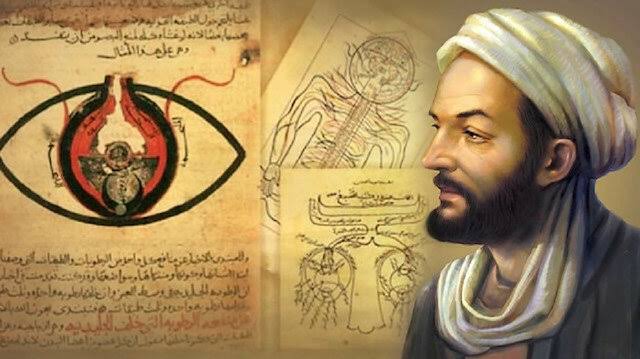
Who is Ibne Sina: The Legacy of a Master Polymath and Medical Pioneer Throughout human history, very few figures have possessed the breadth of knowledge and enduring influence of Ibn Sina (980–1037 AD), known to the Western world as Avicenna. Born near Bukhara in modern-day Uzbekistan during the Islamic Golden Age, Ibn Sina was a Persian polymath whose groundbreaking contributions to medicine, philosophy, astronomy, logic, and natural sciences fundamentally shaped intellectual thought across both the East and the West for centuries. Often hailed as the "Father of Modern Medicine," his intellectual legacy continues to resonate through contemporary science and philosophy. Early Life and Prodigious Talent Ibn Sina’s exceptional intelligence was evident from early childhood. By the age of ten, he had memorized the entire Quran, and by his mid-teens, he was mastering complex studies in Islamic law, mathematics, and philosophy. He turned his attention to medicine at sixteen, viewing it not as a difficult subject, but as an applied science that required rigorous observation and practical experience. By eighteen, his reputation as a skilled physician was firmly established when he successfully cured Nuh II, the Samanid Sultan of Bukhara, earning complete access to the royal library and its vast collection of rare manuscripts. The Masterpieces: The Canon of Medicine and Kitab Al-Shifa Over the course of his lifetime, Ibn Sina authored approximately 450 works, of which around 240 have survived. Among these, two monumental compositions stand out as triumphs of human scholarship: * Al-Qanun fi al-Tibb (The Canon of Medicine): This five-volume encyclopedia synthesized classical Greek medical knowledge—such as the works of Galen and Hippocrates—with Islamic medical insights and his own empirical observations. It covered everything from pharmacology, anatomy, and pathology to surgical techniques and infectious diseases. Translated into Latin during the 12th century, The Canon served as the standard medical textbook in European and Islamic universities for over 500 years. * Kitab Al-Shifa (The Book of Healing): Contrary to its title, this massive work was not about physical medicine, but was an encyclopedia designed to "heal" the soul from ignorance. It systematically explored logic, natural sciences, geometry, astronomy, music, and metaphysics, building heavily upon Aristotelian philosophy while integrating unique theological perspectives. Key Scientific and Philosophical Contributions Ibn Sina was a pioneer of empirical observation and systematic experimentation. In medicine, he was among the first to recognize the contagious nature of infectious diseases, introduce quarantine protocols to mitigate virus spread, correctly identify the sweet taste of urine in diabetic patients, and advance early understandings of human anatomy and neurology. In philosophy, he bridged the gap between Greek rationalism and Islamic theology. His famous "Flying Man" thought experiment anticipated René Descartes' concept of self-awareness and consciousness by several centuries, proving the existence of the human soul independent of physical senses. An Enduring Global Legacy Ibn Sina passed away in 1037 AD in Hamadan, Iran. Yet his intellectual influence laid the groundwork for the European Renaissance and modern scientific methodologies. Today, his portrait hangs in the Faculty of Medicine at the University of Paris, and his name remains synonymous with the pursuit of truth, logic, and medical wisdom across the world.
Comments
No comments yet. Be the first.
Related Stories
Related Stories
First published 3 November 2026. Spotted an error? Read our corrections policy.