
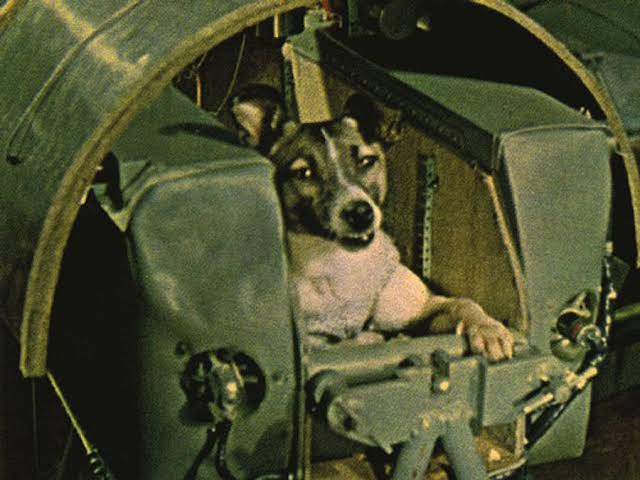
Today marks a monumental anniversary in the history of space exploration. On this very day, November 3, in the year 1957, the Soviet Union launched the Sputnik 2 spacecraft, carrying a quiet street dog named Laika into the great unknown. While humanity had just entered the space age weeks prior with the launch of Sputnik 1, this specific mission crossed a profound biological boundary. On this day, Laika officially became the first living creature from Earth to orbit our planet, transforming an ordinary stray from the freezing streets of Moscow into an immortal pioneer of the cosmos. From Moscow Streets to the Cold Cosmos Before her historic flight, Laika was a small, roughly two-year-old mixed-breed stray surviving the harsh winters and scarcity of the Soviet capital. Recognizing that street dogs possessed remarkable resilience against extreme cold and hunger, Soviet space scientists handpicked her for the perilous mission. Among a group of canine candidates, Laika stood out for her exceptionally calm demeanor, gentle nature, and composure under high stress. The training regimen was intensely demanding. To prepare her for the confined capsule of Sputnik 2, handlers placed Laika in increasingly smaller cages for extended periods. Despite the psychological and physical strain, she maintained her gentle disposition, earning the deep affection of the scientists who prepared her for a journey from which they knew she would never return. The Flight of Sputnik 2 When Sputnik 2 roared into the skies on November 3, 1957, the world watched in a mixture of awe and tension. Inside the spacecraft, telemetry monitors tracked Laika's heartbeat and respiration rates, showing that while she experienced panic and elevated stress during the violent acceleration, she did indeed survive the launch and entered orbit. She became the first beating heart to look back at Earth from the vacuum of space. Due to engineering constraints and the extreme haste with which Sputnik 2 was built, no provisions were made for a safe re-entry strategy. Tragically, within hours of launch, thermal control failures caused the cabin temperature to rise rapidly, and Laika perished quietly in orbit. Though her time in space was short—lasting only a few hours—her ultimate sacrifice answered critical scientific questions, proving that living organisms could survive the transition into orbital flight and paving the direct path for human cosmonauts and astronauts to follow. An Everlasting Legacy Decades have passed since that fateful day in November, yet Laika's memory remains deeply etched in global culture and scientific history. She bridged the gap between terrestrial life and interplanetary ambition, forever changing our relationship with the cosmos. Today, as we look back at her courageous journey, we remember not just a political milestone of the Cold War Space Race, but a small, gentle dog who carried the hopes, curiosity, and dreams of an entire planet out into the silent theater of the stars.
Comments
No comments yet. Be the first.
Related Stories
Related Stories

First published 3 November 2026. Spotted an error? Read our corrections policy.