
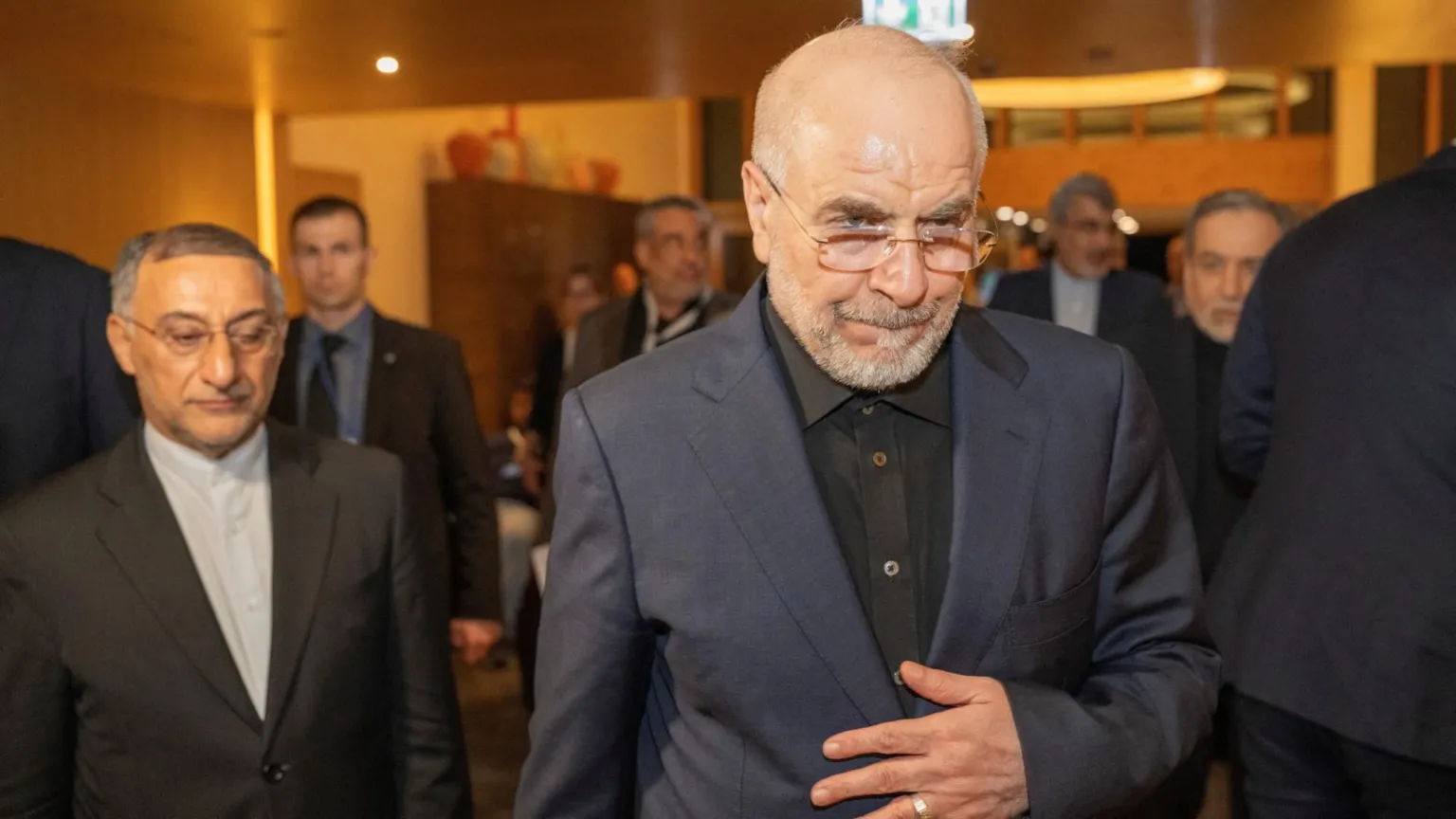
Iran’s chief negotiator, Mohammad Bagher Ghalibaf, has claimed that American voters sent a clear message against war following a major defeat for President Donald Trump’s Republican Party in the US midterm elections. His remarks came as tensions between Washington and Tehran continued to grow, with reports of attacks on oil tankers in the strategically important Strait of Hormuz.
Ghalibaf, who also serves as Iran’s parliament speaker, shared his reaction to the election results on social media platform X on Wednesday. He suggested that the Republican losses reflected public frustration with the ongoing conflict involving Iran, rising living costs and the wider economic consequences of the war.
In his post, Ghalibaf argued that Americans had rejected the conflict, pointing to both their conscience and the increasing cost of everyday life. He also warned that the Iranian government would respond strongly if Washington ignored the wishes of its own citizens.
His comments followed a significant political setback for the Republicans, as Democrats secured major victories in the congressional midterm elections. The results dealt a serious blow to Trump’s political position and raised questions about the domestic consequences of his administration’s foreign policy decisions.
The conflict with Iran has become an important issue for the American public, particularly because of its impact on energy prices. Military tensions in the Middle East have contributed to uncertainty in global oil markets, while disruptions to shipping routes have increased concerns about fuel supplies and transportation costs.
The Strait of Hormuz has become one of the most sensitive areas in the conflict. The narrow waterway connects the Persian Gulf with the Gulf of Oman and the Arabian Sea. It is a major international shipping route through which a substantial share of the world’s oil and gas supplies normally passes.
Any disruption in this passage can have consequences far beyond the Middle East. Countries that depend heavily on imported energy may face higher costs, while businesses and consumers could experience the effects through rising fuel prices, transportation expenses and inflation.
The latest developments have further complicated efforts to reduce tensions between the two countries. On Wednesday, Iran’s Islamic Revolutionary Guard Corps (IRGC) claimed that four oil tankers caught fire after striking naval mines while attempting to cross a restricted route near the Strait of Hormuz.
According to the Iranian military statement, the vessels were attempting to use a passage that Tehran had declared prohibited. The IRGC also claimed that two other ships had been stopped during the incident.
However, these claims have not been independently verified by the BBC. Details about the vessels, the extent of the damage and the circumstances surrounding the reported incidents remain important questions.
The reports have raised fresh concerns about the safety of commercial shipping in the region. Tanker operators and international shipping companies already face uncertainty because of the continuing confrontation between Iran and the United States.
The United Kingdom Maritime Trade Operations (UKMTO), which monitors maritime security incidents, also reported that a tanker had been struck by two unidentified projectiles near Oman’s Musandam Peninsula on Tuesday evening. The incident occurred around 14 nautical miles northeast of Limah. No casualties were reported.
In another incident earlier in the week, an Indian crew member aboard a wooden sailing vessel was killed in an attack northeast of Limah. Omani authorities rescued 13 other crew members following the incident.
These developments have highlighted the growing risks faced by vessels operating near the Strait of Hormuz. Even limited attacks can create uncertainty among shipping companies, increase insurance costs and discourage commercial operators from using routes considered unsafe.
The conflict began in February when the United States and Israel launched military strikes against Iran. The confrontation has since developed into a prolonged crisis, with periods of military escalation followed by attempts to reach a diplomatic settlement.
Although both sides have shown some willingness to consider negotiations, their positions remain far apart. Indirect discussions involving regional mediators have continued, but efforts to reach a lasting agreement have yet to produce a breakthrough.
Qatar has played an important role in facilitating communication between Washington and Tehran. Pakistan and Saudi Arabia have also been involved in diplomatic efforts aimed at preventing another major escalation.
Iran has maintained that its demands must be addressed before a comprehensive agreement can be reached. Its officials have also expressed dissatisfaction with the American response to proposals aimed at ending the conflict.
US President Donald Trump has meanwhile acknowledged that the war with Iran contributed to the Republican Party’s poor performance in the midterm elections. Speaking to Fox News, he accepted that the conflict was one of the factors behind the election outcome.
However, Trump defended his decision to launch military action against Iran. In a separate conversation with The Wall Street Journal, he indicated that he did not regret the decision and maintained that he had acted correctly.
His comments suggest that the election results may not necessarily lead to an immediate change in Washington’s approach towards Tehran. Although the political consequences of the war have become increasingly visible, the administration has continued to defend its broader security objectives.
Trump has also warned that the United States and Israel could resume large-scale military operations if diplomatic efforts fail. Such statements have added to uncertainty about the future of the conflict.
Iranian President Masoud Pezeshkian has also called attention to the consequences of renewed fighting. He has argued that another round of war would benefit neither country and has expressed support for resolving disagreements through dialogue.
Meanwhile, Iran’s foreign ministry has indicated that negotiations are still based on a proposal submitted in September. The proposal reportedly contains several conditions intended to establish a framework for ending the confrontation and restoring stability.
The situation in the Strait of Hormuz remains particularly important because of its connection to international energy supplies. A prolonged disruption could affect oil-producing countries, import-dependent economies and international trade.
For the United States, the challenge involves balancing its military and diplomatic objectives with the growing economic and political costs of the conflict. For Iran, maintaining influence over the waterway and securing favourable terms in negotiations remain major priorities.
Ghalibaf’s latest remarks demonstrate how Tehran is attempting to connect the American election outcome with its position in the ongoing confrontation. Whether the results will influence Washington’s future decisions remains uncertain.
With commercial shipping facing increasing security concerns and diplomatic negotiations still unresolved, the possibility of further escalation cannot be ruled out. The coming days could prove important in determining whether the two sides move towards a negotiated settlement or return to a more intense phase of military confrontation.
Comments
No comments yet. Be the first.
Related Stories
Related Stories
First published 4 November 2026. Spotted an error? Read our corrections policy.