
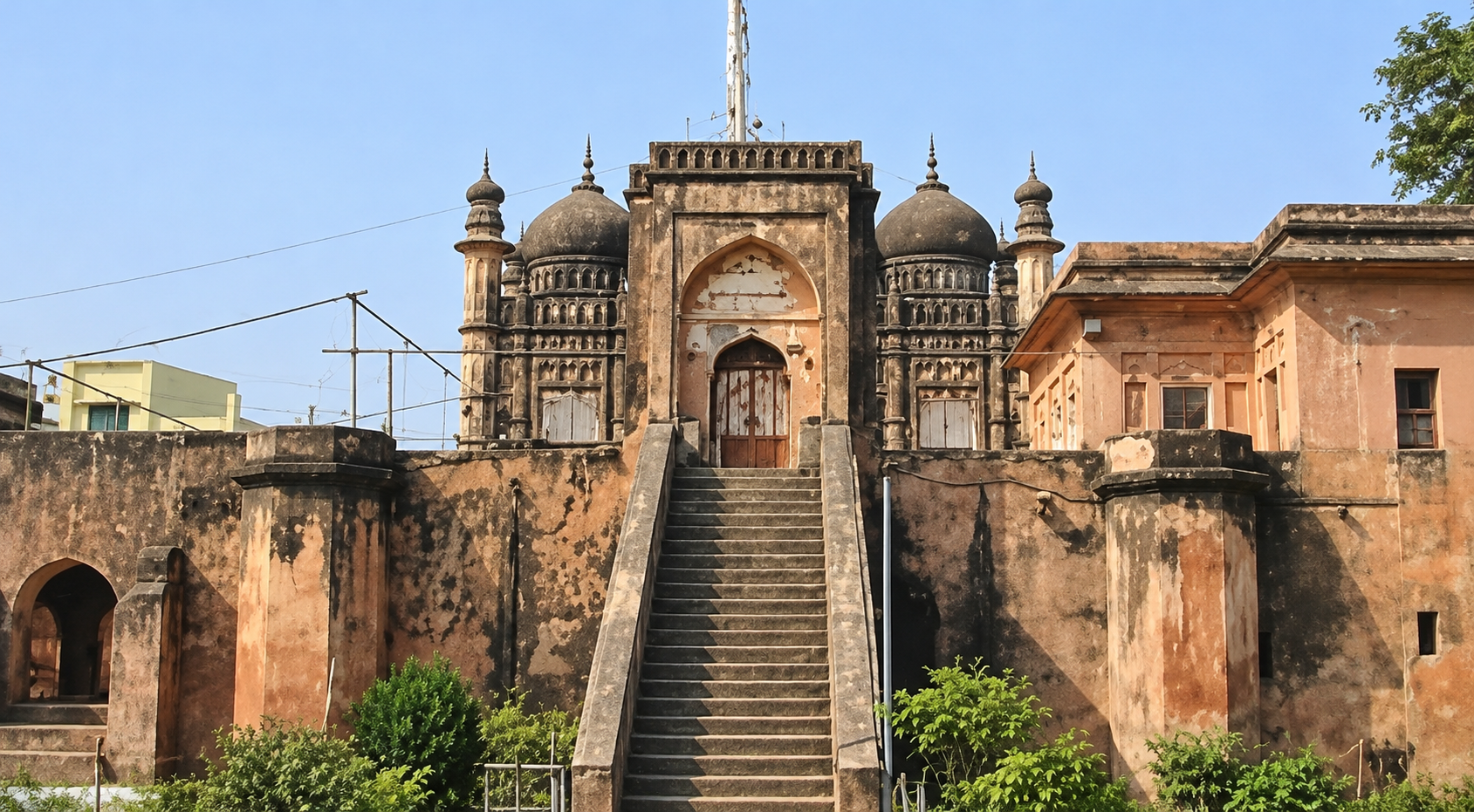
Lalmonirhat, a northern district of Bangladesh, is known not only for its natural beauty and borderland landscape but also for its historical and cultural heritage. Among its notable attractions is the so-called ‘Lost Mosque’, located in the Ramdas area of Panchagram Union.
Believed by some to date back nearly 1,400 years, the mosque has long been surrounded by historical debate and local legends. Some claim that it is one of the oldest mosques not only in Bangladesh but also in Asia. The site has therefore attracted interest among those researching the early spread of Islam in the region.
According to local accounts, the remains of the mosque were discovered in 1983–84, when a jungle in the area was being cleared. A few years later, on 10 Muharram in 1986, a local resident named Ayub Ali reportedly found an inscribed brick. The brick is said to contain the Arabic declaration of faith, or Kalima, along with a reference to the year 69 AH.
The inscription became a major source of discussion about the antiquity of the mosque. The brick is reportedly preserved at the mosque complex today. Various architectural remains and other archaeological objects found at the site have also provided clues about its possible construction techniques and historical background.
The surviving structure is characterized by brick walls, a decorated mihrab, and remnants of arches. Various accounts put the dimensions of the exposed ruins at approximately 21 feet long and 10 feet wide. Remains of four pillars and an old entrance are also said to have been preserved.
Legends Surrounding the Mosque
Several traditions connect the construction of the mosque with Muslim missionaries who travelled to the region during the early period of Islam.
According to local tradition, some of the Companions of the Prophet Muhammad (peace be upon him) may have visited the area and established the mosque. Another popular belief holds that Hazrat Abu Waqqas (RA) laid the foundation of the mosque while travelling toward China and stopping in the region.
However, these claims have not yet been conclusively established through archaeological or historical evidence. Further archaeological investigation and reliable documentary evidence would be necessary to determine the mosque’s exact age and its possible connection with the Companions.
The geographical setting of the area is another reason historians are interested in the site. The Brahmaputra and Teesta river basins played an important role in the movement of people and the development of trade routes in earlier periods. River-based communication may have connected the region with distant parts of the subcontinent and beyond.
The As-Sahaba Complex
Over time, the ruins have become associated with the ‘As-Sahaba Complex’, also known as the ‘69 AH Lost (Sahaba) Mosque Complex.’
A Qawmi madrasa has also been established around the mosque. According to local information, around 200 students currently study there.
How to Get There
Visitors travelling from Dhaka to Lalmonirhat can choose either bus or train. From Lalmonirhat town, local transport such as an auto-rickshaw can be used to reach the mosque in the Ramdas area of Panchagram.
By bus: A bus journey from Dhaka to Lalmonirhat may take around 8–10 hours. Depending on the type of bus, a one-way fare may range from approximately Tk 868 to Tk 1,700.
By train: The Lalmoni Express can be taken from Kamalapur Railway Station in Dhaka. The journey takes approximately 9 hours and 35 minutes. The fare for a Shovon Chair seat reportedly starts at around Tk 680, although passengers should verify the latest fare and schedule before travelling.
From Lalmonirhat town: Visitors can hire an auto-rickshaw or other local transport to reach the mosque. It is advisable to agree on the fare in advance, as the cost may vary depending on the vehicle and number of passengers.
Estimated Travel Cost
For a round trip from Dhaka by train, the approximate Shovon Chair fare would be around Tk 1,360. Travelling by bus could cost approximately Tk 1,736–3,400 for a round trip.
Additional expenses for local transportation, food and other necessities should also be considered. Travellers are advised to check the latest transport fares before making their journey.
A Site Worth Further Investigation
The Lalmonirhat ‘Lost Mosque’ continues to attract curiosity because of its ruins, reported inscription and stories linking it to the early history of Islam in Bengal.
Its reported connection with the Companions of the Prophet and its claim to an origin around 69 AH are particularly significant if eventually verified. However, such claims should be distinguished from established historical fact until they are supported by archaeological research, scientific dating, inscriptions and reliable historical evidence.
For now, the site remains an intriguing part of Lalmonirhat’s heritage—and potentially an important subject for further archaeological and historical investigation.
If you want, I can also rewrite it in a professional newspaper style suitable for publication on a news/blog website, with a stronger headline, SEO-friendly subheadings, and a more engaging introduction.
Comments
No comments yet. Be the first.
Related Stories
Related Stories

First published 5 November 2026. Spotted an error? Read our corrections policy.