
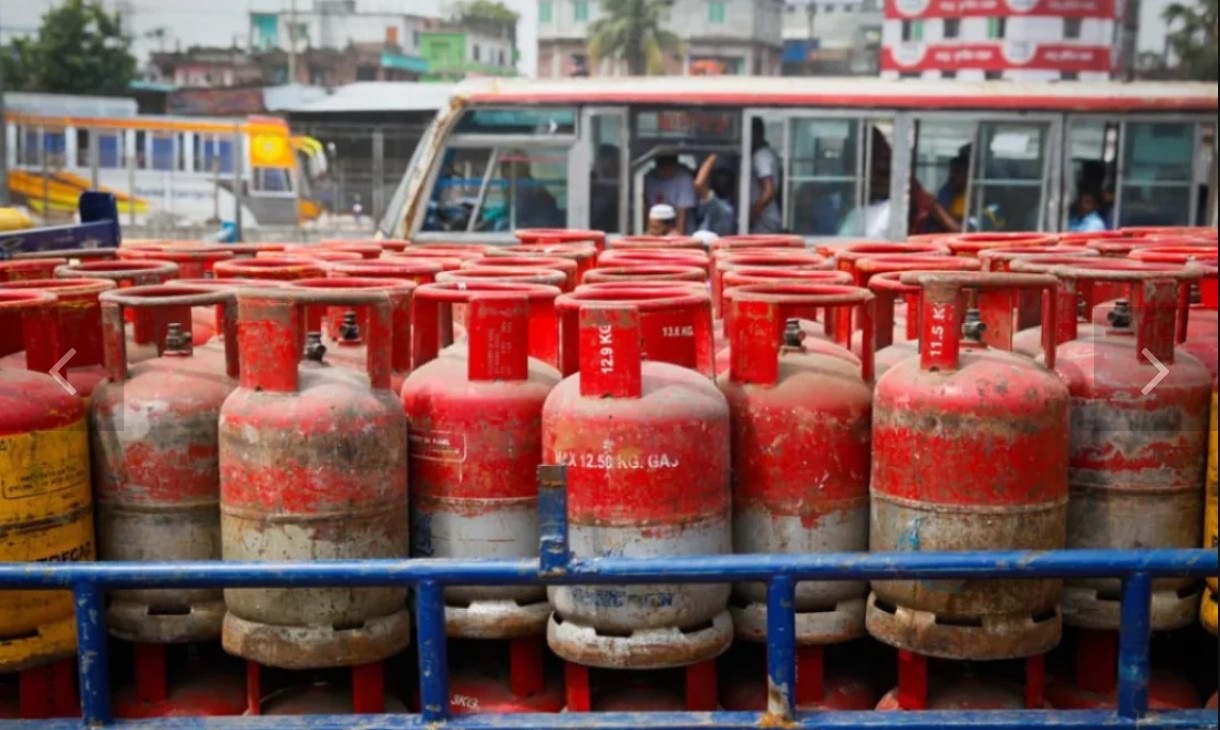
The price of liquefied petroleum gas (LPG) in Bangladesh has increased again, adding to the financial pressure on households that depend on cylinder gas for everyday cooking. The Bangladesh Energy Regulatory Commission (BERC) has raised the official retail price of a 12-kilogram LPG cylinder by Tk223, bringing the new price to Tk2,060 for November.
The revised rate took effect at 8pm on 2 November, according to the commission’s announcement. Before the latest adjustment, a 12kg cylinder was priced at Tk1,837 in October. The increase comes just one month after another major price hike, leaving consumers facing a combined rise of Tk475 over the past two months.
In October, BERC increased the price of a 12kg cylinder by Tk252, raising it from Tk1,585 to Tk1,837. The latest decision means families must now spend considerably more to purchase the same amount of cooking fuel than they did in September.
Under the new pricing structure, the official retail price of privately marketed LPG has been set at Tk171.68 per kilogram, compared with Tk153.06 in October. The commission reviews LPG prices every month, taking international market prices and other relevant costs into account.
The increase is likely to affect a large number of households across the country, particularly those without access to piped natural gas. For many families, LPG cylinders are a primary source of fuel for preparing daily meals. A rise in the price of cooking gas can therefore put additional pressure on household budgets, especially when other essential expenses also require careful management.
The impact may be particularly difficult for lower and middle-income families, who often have limited room to absorb unexpected increases in everyday costs. Households that regularly purchase a new cylinder must now allocate more money to cooking fuel, potentially leaving less for groceries, education, transportation and other necessities.
The official price adjustment also comes amid concerns about the gap between government-approved rates and the prices consumers actually pay in the market. Reports have indicated that 12kg cylinders were selling for around Tk2,200 to Tk2,300 in parts of the country, including Dhaka, even before the latest increase came into effect.
Such prices were already significantly higher than October’s official rate of Tk1,837. The latest adjustment has raised concerns that consumers could continue to face additional costs if retailers fail to follow the regulated price.
BERC’s announcement establishes the approved retail rate, but the experience of consumers depends on whether cylinders are available at that price. When the market price exceeds the official rate, families may have to spend more than the regulator’s stated amount to secure their cooking fuel.
The repeated price increases also highlight the importance of monitoring LPG distribution and retail sales. Clear information about approved prices and stronger oversight of the supply chain could help consumers understand what they should pay and where to report overcharging.
Alongside household cooking gas, the commission has also increased the price of autogas, an LPG-based fuel widely used by vehicles. The price has risen from Tk84.62 to Tk91.95 per litre for November, representing an increase of Tk7.33 per litre.
The change may affect drivers and transport operators who use autogas, potentially increasing their operating expenses. The extent to which this could influence transport costs will depend on how businesses respond to the higher fuel price and whether additional expenses are passed on to customers.
BERC has also revised the price of LPG supplied by the state-owned LP Gas PLC. The retail price of a 12.5kg cylinder from the state-owned supplier has been set at Tk1,860, compared with the previously reported rate of Tk777 in October. This is an increase of Tk1,083.
The state-owned cylinder has a different capacity from the privately marketed 12kg cylinder, so the two prices should not be compared without considering the difference in weight and supply arrangements.
International LPG prices are an important factor in Bangladesh’s monthly pricing decisions because the country relies heavily on imported fuel to meet domestic demand. Changes in global prices, import-related expenses and currency exchange rates can influence the cost of bringing LPG into the country.
For November, Saudi Aramco set its contract price at $720 per tonne for propane and $780 per tonne for butane. These two products are commonly blended to produce LPG. Based on a mixture containing 35 per cent propane and 65 per cent butane, the weighted average contract price was calculated at $759 per tonne, up from $712.50 in October.
This represents an increase of $46.50 per tonne in the international benchmark used in the pricing calculation. According to the reported figures, the change in the international benchmark accounts for approximately Tk74 of the increase in the price of a 12kg cylinder, including value-added tax.
The commission’s calculation also takes other expenses into account, including transportation, storage, bottling and distribution. Importers’ costs and the exchange rate used for the calculation can also influence the final price paid by consumers.
The recent increase follows discussions about LPG operators’ operating expenses and the charges associated with supplying cylinders to customers. Industry participants have sought adjustments to several charges, including those related to bottling, distribution and retail sales.
However, the challenge for consumers extends beyond the official pricing formula. Even when the regulator announces a fixed price, limited availability and higher retail charges can make it difficult for households to purchase gas at the approved rate.
The latest decision places renewed attention on both the cost of imported fuel and the way LPG reaches consumers. While international price movements remain an important part of the calculation, effective market supervision is also necessary to ensure that households are not charged substantially more than the approved rate.
With the new price now in effect, consumers will have to adjust their budgets to accommodate the higher cost of cooking gas. Whether the official increase translates into a consistent retail price across the country will depend on supply conditions, distribution practices and enforcement of the regulator’s pricing decision.
Comments
No comments yet. Be the first.
Related Stories
Related Stories

First published 3 November 2026. Spotted an error? Read our corrections policy.